
Night Vision CCTV Camera: Complete Guide
Explore night vision CCTV cameras, including infrared, colour night vision and low-light technology. Compare viewing range, clarity and features to choose a camera for your home, shop or business.
By virnobyte team · · 21 min read

Night Vision CCTV Camera: Complete Guide to Infrared, Colour Night Vision and Low-Light Technology (2026)
A CCTV camera should provide useful footage during the day and at night. However, darkness creates additional challenges for surveillance because cameras receive less visible light, making it difficult to capture clear images of people, vehicles and other objects.
Modern night vision CCTV cameras solve this problem using technologies such as infrared illumination, colour night vision, sensitive image sensors and intelligent lighting systems.
Some cameras produce black-and-white footage using invisible infrared light. Others use white-light LEDs to capture colour images. Advanced low-light cameras can even maintain colour video in very dim environments without continuously turning on an external light.
In this complete guide, we explain how night vision CCTV cameras work, compare infrared and colour night vision, discuss viewing range and image quality, and help you choose the right night vision camera for your home or business in India.
1. What Is a Night Vision CCTV Camera?
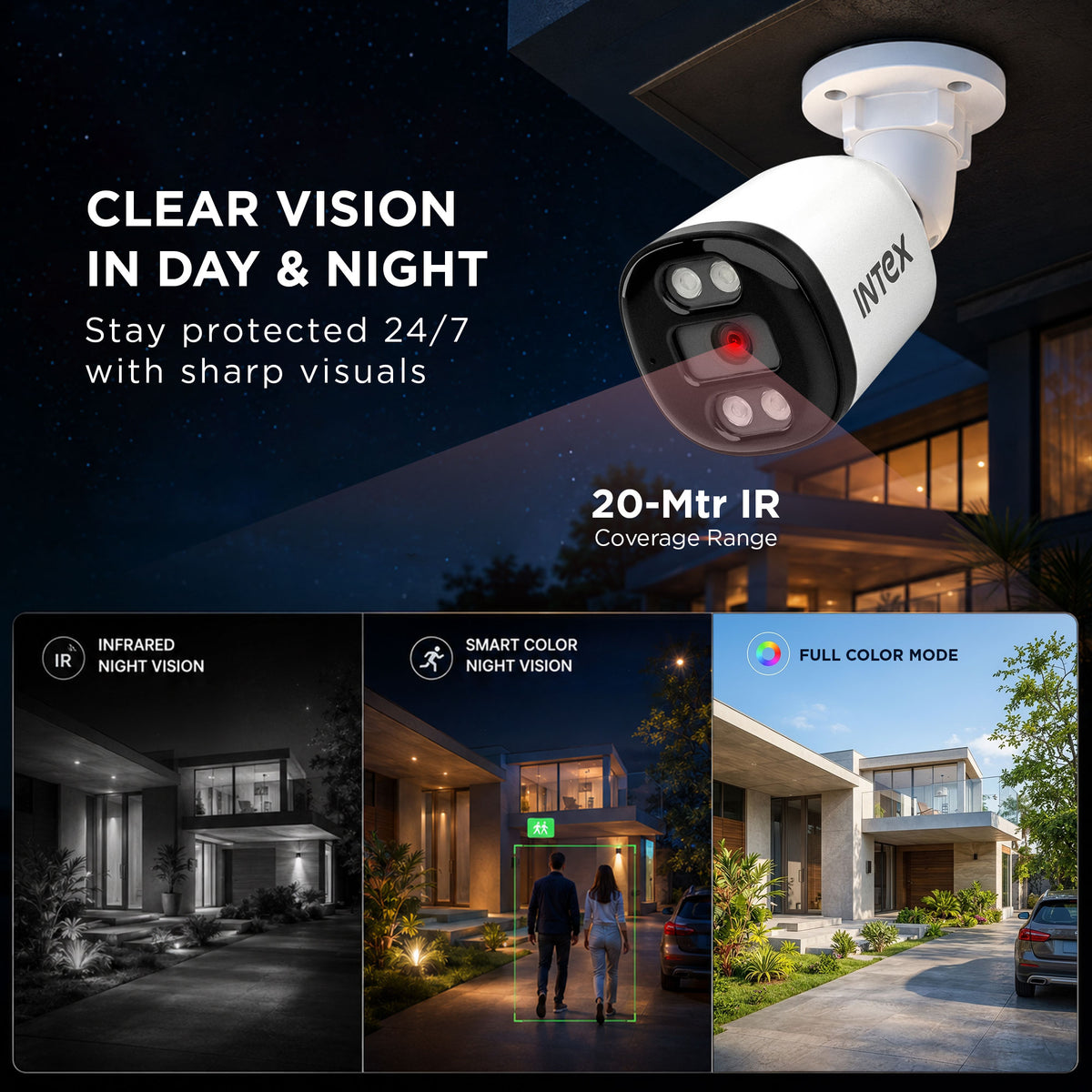
A night vision CCTV camera is a surveillance camera designed to capture images in low-light or dark conditions. It uses infrared illumination, advanced sensors, visible-light illumination or a combination of these technologies to produce usable video when normal lighting is insufficient.
Night vision cameras are commonly installed in:
- Home entrances and outdoor areas.
- Retail shops and showrooms.
- Office buildings and reception areas.
- Warehouses and storage facilities.
- Parking areas and building gates.
- Factories and manufacturing units.
- Commercial properties requiring after-hours monitoring.
Depending on the camera technology, night-time footage may appear in black and white or full colour.
2. How Does CCTV Night Vision Work?
During the daytime, a CCTV camera normally captures visible light and produces colour images. When natural light decreases, the camera must use another method to maintain a useful image.
Many day-and-night cameras use a mechanical IR-cut filter. During daylight, this filter blocks infrared light to maintain natural colour reproduction. When the surroundings become dark, the filter moves away so the sensor can detect near-infrared light.
When infrared LEDs illuminate the scene, the camera can produce black-and-white footage even in very dark conditions.
Some advanced cameras work differently. They use highly sensitive sensors and lenses to collect available visible light, or switch on additional white or warm illumination to capture colour footage.
Basic night vision process
- The camera detects a reduction in ambient light.
- Its automatic day/night function changes the imaging mode.
- The camera uses infrared illumination or an available light source, depending on its design.
- The image sensor captures the scene.
- The camera processes the video and sends it to the DVR, NVR or network application.
For a more detailed technical explanation, read Axis Communications – IR in Surveillance.
3. Types of Night Vision CCTV Cameras
Night vision CCTV technology is available in several forms. Understanding their differences will help you select the correct camera for your installation.
A. Infrared (IR) Night Vision Cameras
Infrared night vision is one of the most widely used technologies in security cameras. These cameras use infrared LEDs to illuminate the monitored area with near-infrared light.
The human eye generally cannot see this infrared illumination, but compatible camera sensors can detect it.
Because infrared light is outside normal visible colour imaging, traditional IR night vision generally produces black-and-white footage.
Advantages of infrared CCTV cameras
- Can capture footage in complete darkness when correctly illuminated.
- Does not normally require bright visible lighting.
- Suitable for outdoor entrances, corridors and parking areas.
- Useful for after-hours surveillance.
- Can provide clear monochrome footage with suitable sensor and illumination.
Limitations of infrared CCTV cameras
- Night-time footage is generally black and white.
- Colour information such as clothing colour may not be available.
- Nearby walls or reflective surfaces may cause IR glare.
- Actual useful viewing distance depends on illumination, lens and scene conditions.
B. Full-Colour Night Vision Cameras
Full-colour night vision cameras are designed to retain colour video during low-light conditions. They achieve this using sensitive image sensors, wide-aperture lenses and, depending on the model, built-in visible-light illumination.
Some cameras can capture colour footage using very little ambient light. Others use warm or white LEDs to illuminate the scene and maintain colour images.
These cameras may be marketed under technology names such as:
- Hikvision ColorVu.
- Dahua Full-color.
- Manufacturer-specific colour night vision technologies.
The exact implementation and performance vary by camera model.
Advantages of full-colour night vision
- Can preserve colour information after dark.
- May help distinguish clothing, vehicles and other visual details.
- Useful around shop entrances and residential gates.
- Selected models combine high-sensitivity sensors with additional lighting.
Limitations of full-colour night vision
- Some cameras need visible-light illumination to maintain colour.
- Built-in LEDs may be noticeable to nearby people.
- Additional lighting can affect neighbouring properties.
- Performance may reduce in very dark environments without sufficient illumination.
Read the official Hikvision ColorVu technology guide.
C. Smart Hybrid Light Night Vision Cameras
Smart Hybrid Light cameras combine infrared illumination with visible white or warm light. They can operate in infrared mode during normal nighttime conditions and switch to visible illumination when a configured event is detected.
For example, a camera may use infrared illumination when a shop is closed. When its supported detection system identifies a person, the visible light may turn on and the camera may begin recording colour footage.
Hikvision calls one implementation Smart Hybrid Light, while Dahua offers Smart Dual Light technology.
Advantages:
- Can provide discreet infrared monitoring during normal conditions.
- Can switch to colour recording when an event occurs.
- May reduce unnecessary visible illumination.
- Useful for entrances, parking areas and commercial premises.
Read the official manufacturer guides:
D. Low-Light CCTV Cameras
Low-light cameras use sensitive image sensors, suitable lenses and image-processing technologies to capture colour images in environments where normal cameras may struggle.
These cameras attempt to collect and process as much available light as possible before requiring additional illumination.
Technologies such as Axis Lightfinder are designed to maintain colour image quality in very low-light environments.
Advantages
- Can retain colour information in dimly lit locations.
- May reduce the need for continuous visible lighting.
- Can help capture details of people and vehicles in suitable conditions.
- Useful for business entrances, building exteriors and areas with some ambient lighting.
Limitations
- Performance depends on available light.
- Very dark scenes may still require IR or visible illumination.
- Fast movement can cause blur if exposure settings are unsuitable.
- Quality and colour accuracy vary between models.
Explore Axis Lightfinder technology for an explanation of how sensitive sensors, optics and image processing support colour footage in low light.
E. Thermal Cameras
Thermal cameras work differently from conventional night vision cameras. They detect infrared radiation emitted by objects and produce images based on temperature differences.
Thermal cameras are useful for detecting people, animals or objects in darkness and certain difficult visibility conditions. However, they generally do not provide the same facial or clothing details as normal optical CCTV cameras.
Thermal imaging is therefore a specialised surveillance technology rather than a direct replacement for standard IR or colour night vision cameras.
Read Axis – IR Imaging Compared with Thermal Imaging.
4. IR Night Vision vs Colour Night Vision vs Low-Light Cameras
The following table compares the main characteristics of different night vision technologies.
| Feature | IR Night Vision | Colour Night Vision | Low-Light Camera |
|---|---|---|---|
| Typical image | Black and white | Colour | Colour in suitable lighting |
| Lighting method | Infrared LEDs | High-sensitivity sensor and/or visible LEDs | Available ambient light and sensitive sensor |
| Complete darkness | Yes, with suitable IR illumination | Usually requires additional visible illumination unless another supported light source is available | Generally needs some visible light or supplementary illumination |
| Colour information | Generally unavailable | Available | Available when lighting is sufficient |
| Visible light | Normally no continuous visible light required | May use white or warm LEDs | May work without additional lighting in suitable conditions |
| Privacy and light pollution | Usually more discreet | Visible LEDs may be noticeable | Depends on available and supplementary lighting |
| Common application | Dark corridors, perimeter and parking | Entrances, gates and areas needing colour evidence | Dimly lit offices and commercial spaces |
5. What Is the Difference Between 850nm and 940nm Infrared?
Infrared CCTV cameras commonly use wavelengths such as 850nm and 940nm. These wavelengths are outside normal visible vision, but they have some practical differences.
850nm infrared
850nm is widely used in surveillance illumination. When viewed directly, the infrared LEDs may produce a faint reddish glow.
It is commonly selected because compatible camera sensors can use this wavelength effectively.
940nm infrared
940nm infrared LEDs are generally less visibly noticeable and do not produce the same visible red glow as many 850nm illuminators.
However, many cameras are less sensitive to 940nm illumination than to 850nm, so the useful illumination distance may be lower for otherwise comparable equipment.
| Feature | 850nm IR | 940nm IR |
|---|---|---|
| Visible red glow | Often a faint glow | Generally no visible glow |
| Sensor sensitivity | Commonly supported by CCTV sensors | Depends on camera compatibility |
| Illumination effectiveness | Often more efficient for comparable cameras | Often less effective in comparable systems |
| Typical application | General night surveillance | Selected low-visibility applications |
Always verify the camera and illuminator wavelength compatibility. The performance difference varies by sensor and product design.
For more technical details, read the OpenEye guide to 850nm and 940nm IR emitters.
6. What Is IR Range in CCTV Cameras?
IR range refers to the approximate distance over which the camera's infrared illumination is designed to reach. Manufacturers commonly advertise night vision distances such as 20 metres, 30 metres, 50 metres or more.
However, the advertised IR distance should not be confused with the distance at which a person can be clearly identified.
For example, a camera may illuminate an area at a distance of 30 metres, but its lens and sensor may not capture enough detail to identify a person's face at that distance.
Factors affecting actual night vision range
- Infrared LED power and beam angle.
- Camera sensor sensitivity.
- Lens focal length and aperture.
- Camera resolution and pixel density.
- Reflectivity of objects in the scene.
- Fog, dust, rain and environmental conditions.
- Camera mounting height and viewing direction.
The CCTV42 IR Range Guide explains the difference between illumination distance and useful optical identification distance.
7. What Is Lux Rating in Night Vision CCTV Cameras?
Lux is a unit used to measure illuminance, or the amount of visible light falling on a surface. Camera datasheets often include a minimum illumination specification expressed in lux.
A lower minimum-illumination value may indicate that a camera can produce an image in darker conditions, but lux figures should only be compared when the test conditions and camera operating modes are understood.
Common lighting conditions
| Lighting Condition | Typical Environment |
|---|---|
| Bright daylight | Outdoor areas during the day |
| Well-lit interior | Office and retail lighting |
| Low illumination | Dim corridors and parking areas |
| Very low light | Outdoor locations with limited ambient lighting |
| 0 lux visible light | Complete darkness to the visible-light sensor |
A camera advertising 0 lux capability may be relying on its own infrared or visible-light illuminator. Therefore, check the test conditions rather than assuming that it can capture full-colour images without any light source.
8. How to Choose the Best Night Vision CCTV Camera
Before purchasing a night vision CCTV camera, check the following technical specifications.
A. Resolution
Choose a resolution according to the camera's viewing distance and the level of detail required.
| Resolution | Typical Application |
|---|---|
| 2MP / Full HD | Basic entrances and general monitoring |
| 4MP | Home entrances, offices and shops |
| 5MP | Additional image detail for commercial applications |
| 8MP / 4K | High-detail monitoring and larger scenes where properly planned |
Higher resolution alone does not guarantee better night vision. Lens quality, sensor size, illumination and exposure settings are equally important.
Related guide: 2MP vs 5MP vs 8MP CCTV Camera (replace this placeholder with the actual published article URL).
B. Sensor size and lens aperture
A sensitive image sensor and a lens with a suitable aperture can help capture more available light.
Check the lens specification and minimum illumination rating when comparing cameras designed for low-light environments.
C. Night vision distance
Check the specified IR or visible-light illumination range, but evaluate actual identification requirements separately. A long advertised illumination distance does not automatically mean that the camera can identify people at that distance.
D. Wide Dynamic Range (WDR)
WDR helps a camera handle scenes with very bright and very dark areas. It can be helpful near entrance doors, gates and glass-fronted buildings where lights or vehicle headlights create strong contrast.
E. Noise reduction
Digital noise reduction helps reduce graininess in low-light recordings. However, excessive image processing can sometimes soften fine details or create motion trails.
F. Weather protection
Outdoor night vision cameras should have a suitable weather-resistant rating. Check the product's IP rating, operating temperature and installation requirements.
9. Best Night Vision CCTV Camera Technologies for Different Locations
Not every location needs the same type of night vision. Choose a camera based on lighting conditions, monitoring distance and the security details you need to capture.
| Location | Suggested Technology | Reason |
|---|---|---|
| Home entrance | IR or colour night vision | Monitor people entering and leaving after dark |
| Shop entrance | Colour or smart hybrid light | Colour information may help review incidents |
| Parking area | IR or smart dual-light camera | Monitor vehicles and movement at night |
| Office corridor | IR night vision | Discreet monitoring in dark indoor areas |
| Warehouse | IR or low-light IP cameras | Cover larger spaces and storage zones |
| Factory entrance | Colour night vision or IR | Choose based on lighting and identification needs |
| Residential perimeter | IR or smart hybrid illumination | Monitor outdoor access points |
| Large industrial perimeter | IR or specialist thermal detection | Long-range detection may require dedicated equipment |
10. Night Vision CCTV Camera Placement Tips
Even an advanced night vision camera may produce poor footage if installed at the wrong angle or position.
Important installation tips
- Install cameras at a suitable height for the intended monitoring task.
- Avoid pointing cameras directly at strong light sources.
- Check the view during both daytime and nighttime.
- Keep the infrared beam clear of nearby walls and reflective surfaces.
- Avoid placing indoor infrared cameras too close to glass windows, as reflected IR may affect the image.
- Clean dome covers and remove dust or spider webs.
- Use suitable lenses for the actual distance and field of view.
- Test night vision with people or vehicles moving through the scene.
- Consider additional lighting when the built-in illumination is insufficient.
Why do infrared cameras sometimes produce white glare?
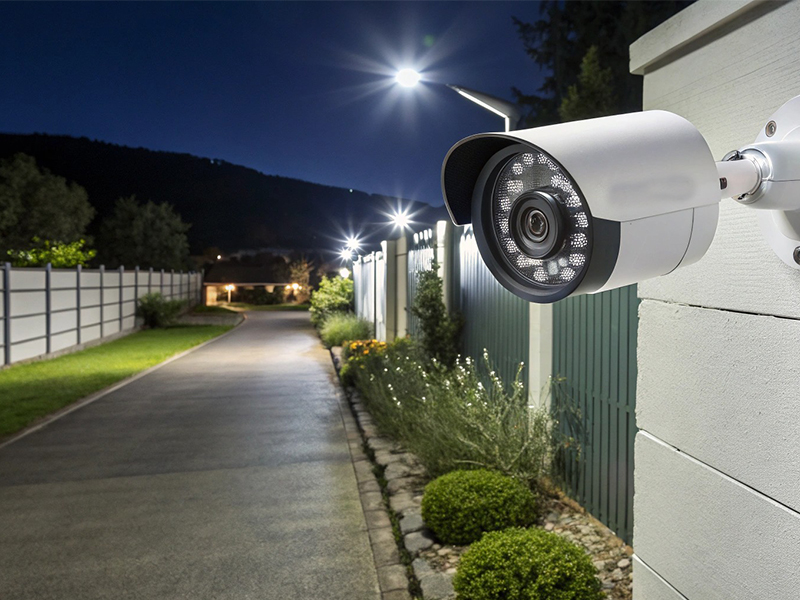
Infrared illumination can reflect off nearby walls, ceilings, windows, dirty camera covers, spider webs or water droplets. This can create a foggy appearance or bright spots in the recorded footage.
Axis recommends camera positioning that prevents the infrared beam from reflecting off nearby surfaces and regular cleaning of the dome or camera cover.
Read Axis – Infrared Reflections in Surveillance Cameras for more information.
11. Recommended Night Vision CCTV Camera Brands and Technologies
Several manufacturers offer cameras with infrared, full-colour night vision and advanced low-light technologies. The following are examples of technology families to consider rather than a universal product ranking.
1. Hikvision ColorVu
Hikvision ColorVu cameras are designed to provide colour images in low-light conditions using high-sensitivity sensors, suitable lenses and supplemental illumination on supported models.
Selected models also offer Smart Hybrid Light, allowing users to choose infrared, white-light or smart illumination modes.
Recommended applications include shop entrances, outdoor gates and commercial premises where colour information may be useful.
Explore Hikvision ColorVu cameras.
2. Dahua Full-Color and Smart Dual Light
Dahua Full-Color cameras are designed for low-light colour surveillance. Selected Smart Dual Light models combine infrared and warm-light illumination.
In smart illumination mode, supported cameras can use infrared during normal night conditions and switch to warm visible light when a target is detected.
Explore Dahua Smart Dual Light technology.
3. Axis Lightfinder
Axis Lightfinder technology combines sensitive image sensors, optical components and image processing to maintain colour images in very low-light environments.
Selected Axis cameras can produce colour images in extremely low illumination, but exact performance varies by model and scene conditions.
Explore Axis Lightfinder technology.
4. Intex Day-and-Night Cameras
Intex offers CCTV cameras with day-and-night functions. Its published 2.4MP AHD bullet camera specifications include 20-metre IR illumination, a 3.6mm fixed lens and automatic day/night modes.
View the Intex AHD Bullet camera specifications.
12. Does Night Vision Affect CCTV Storage Requirements?
Night vision settings can affect recorded file sizes, although the exact difference depends on video compression, bitrate, frame rate, resolution and scene activity.
For example, a colour night vision camera may record more visual detail from an illuminated scene than a monochrome infrared camera. This can influence the encoder's bitrate, but colour footage does not automatically require a fixed percentage more storage.
Factors to consider
- Resolution and frame rate.
- H.264 or H.265 compression.
- Configured average or maximum bitrate.
- Nighttime motion and scene complexity.
- Continuous or motion-based recording.
- Required footage retention period.
Read our related article: How Much Storage Is Required for CCTV Cameras? (replace with its published article URL).
13. Common Night Vision CCTV Problems and Solutions
| Problem | Possible Cause | Suggested Solution |
|---|---|---|
| Night video is too dark | Insufficient illumination or unsuitable camera placement | Check IR LEDs, exposure and additional lighting. |
| White glare in night footage | IR reflection from walls, glass, dirt or spider webs | Clean the lens cover and adjust camera position. |
| Image is blurry at night | Focus issue, low light or slow shutter | Check focus, exposure and lens specifications. |
| Colour changes to black and white | Camera switched to IR night mode | Check whether colour night mode or visible illumination is supported. |
| IR LEDs are not working | Power supply, illumination or hardware fault | Check camera status and seek technical inspection. |
| Night footage has excessive noise | Very low light or high sensor gain | Improve lighting and review noise-reduction settings. |
| Moving people appear blurred | Long exposure time or low frame rate | Review shutter and frame-rate settings. |
| Infrared range is insufficient | Incorrect illumination angle or excessive viewing distance | Reposition the camera or consider a suitable additional illuminator. |
14. How to Maintain a Night Vision CCTV Camera
Regular maintenance helps preserve image clarity, illumination performance and reliable recording.
- Clean the lens and protective dome regularly.
- Check infrared LEDs after dark.
- Inspect camera housings for dust and moisture.
- Check mounting brackets and camera alignment.
- Inspect cable and power connections.
- Test recorded footage, not just live video.
- Check for reflections caused by spider webs or nearby walls.
- Review camera settings after firmware updates.
- Check HDD health and storage capacity.
- Verify mobile viewing and remote-access functionality.
For a broader inspection routine, read our guide: CCTV Maintenance Checklist for Businesses (replace this placeholder with the actual published article URL).
15. Why Choose Virnobyte for Night Vision CCTV Installation?
Virnobyte Private Limited provides CCTV surveillance, networking, computer hardware and IT support solutions for homes, shops, offices, showrooms and commercial properties.
We help customers select night vision cameras based on lighting conditions, camera placement, viewing distance, image quality, storage requirements and budget.
Our CCTV and IT services include:
- Infrared CCTV camera installation.
- Colour night vision camera installation.
- Smart hybrid-light and low-light CCTV solutions.
- Indoor dome and outdoor bullet cameras.
- IP camera and analog HD CCTV systems.
- DVR and NVR installation.
- Remote viewing configuration.
- Network cabling and PoE switch installation.
- CCTV troubleshooting and maintenance.
- Hardware and networking AMC services.
Virnobyte has its head office in Pune, Maharashtra, a strong presence in Karnataka and Goa, and serves customers across India. On-site service availability depends on location and project requirements. Remote assistance and product supply can be arranged according to service and project requirements.
Looking for Night Vision CCTV Cameras?
Need CCTV cameras for your home entrance, shop, office, showroom, warehouse or outdoor premises? Virnobyte can help you evaluate the lighting conditions and select suitable infrared, colour night vision or low-light surveillance equipment.
VIRNOBYTE PRIVATE LIMITED
Technology • Innovation • Trust
Head Office: Sadichha Complex, Sawtamali Temple Road, Jadhavwadi, Chikhali, Pune – 411062, Maharashtra, India.
Phone: 8669883332
Email: info@virnobyte.com
Website: www.virnobyte.com
Contact Virnobyte for CCTV installation, camera selection and technical support.
Frequently Asked Questions (FAQs)
1. What is night vision in CCTV cameras?
Night vision allows a CCTV camera to capture usable video in low-light or dark environments. It may use infrared LEDs, visible-light illumination or sensitive image sensors.
2. Which is better: infrared or colour night vision?
Infrared is suitable for discreet monitoring in darkness and normally produces black-and-white video. Colour night vision is useful when colour information is important, but some models need visible-light illumination.
3. Can CCTV cameras see in complete darkness?
Yes. Cameras with suitable infrared illumination can capture images in complete darkness even when there is no visible light. Full-colour cameras may need their own visible-light illuminators.
4. What is the difference between 850nm and 940nm infrared?
850nm infrared is widely used and may produce a faint red LED glow. 940nm generally produces no visible glow, but compatible camera systems may deliver less illumination range.
5. What does 30-metre IR range mean?
It describes the approximate reach of the camera's infrared illumination under specified conditions. It does not guarantee that a person's face can be identified at 30 metres.
6. Does colour night vision work without lights?
Some high-sensitivity cameras can capture colour images in very low ambient light. In complete darkness, most visible-light colour systems need additional lighting, while conventional IR systems produce monochrome images.
7. What is Smart Hybrid Light in CCTV?
Smart Hybrid Light combines infrared and visible-light illumination. A compatible camera can normally use IR at night and switch to visible light when a supported event is detected.
8. What is the best night vision CCTV camera for a home?
A suitable infrared or colour night vision camera depends on your home's lighting, entrance distance, coverage area and budget. IR is useful for discreet monitoring, while colour night vision may help capture additional scene details.
9. Is 2MP enough for night vision CCTV?
A 2MP camera can provide useful night surveillance for general monitoring. For areas requiring greater recorded detail, consider a higher-resolution camera with a suitable lens and sensor.
10. Why does my CCTV camera show a black-and-white picture at night?
The camera has likely switched to infrared night mode. This is normal for traditional IR cameras. Check the product specifications if you expected continuous colour footage.
11. Why does my CCTV camera show white spots at night?
White spots or glare can occur when infrared light reflects from dust, spider webs, water droplets, nearby walls or reflective objects. Clean the camera cover and adjust its position.
12. Does night vision CCTV consume more storage?
Storage usage depends mainly on bitrate, resolution, frame rate, compression and recording duration. Different night vision modes may change the image data and encoder behaviour, but the actual storage difference must be measured or calculated using the configured bitrate.
Helpful External Resources and Technical Guides
These manufacturer and technical resources provide additional information about night vision, infrared illumination and low-light surveillance.
- Axis Communications – IR in Surveillance: Explains infrared wavelengths, day-and-night filters, IR illumination, reflections and night vision system design.
- Axis – Lightfinder Technology: Explains sensor sensitivity, low-light colour imaging and motion clarity.
- Hikvision – ColorVu Technology: Information about full-colour night imaging, large-aperture lenses, supplemental lighting and Smart Hybrid Light.
- Dahua – Smart Dual Light Technology: Explains the combination of infrared and warm-light illumination and event-triggered colour video.
- OpenEye – 850nm vs 940nm Infrared: Provides technical information about infrared wavelengths, sensor compatibility and illumination.
- CCTV42 – Understanding Infrared Range: Explains why IR illumination distance should not be confused with the distance at which a camera can identify a person.
- Intex – AHD Bullet 2.4MP CCTV Camera: Example of a day-and-night CCTV camera with published IR and image specifications.
Disclaimer: Night vision performance varies by camera model, sensor, lens, illumination wavelength, distance, installation angle and environmental conditions. Manufacturer-advertised viewing distances are not guarantees of identification quality. Always evaluate sample footage and the exact product datasheet before purchasing. Third-party images belong to their respective owners; obtain reuse permission or use licensed photographs before commercial publication.